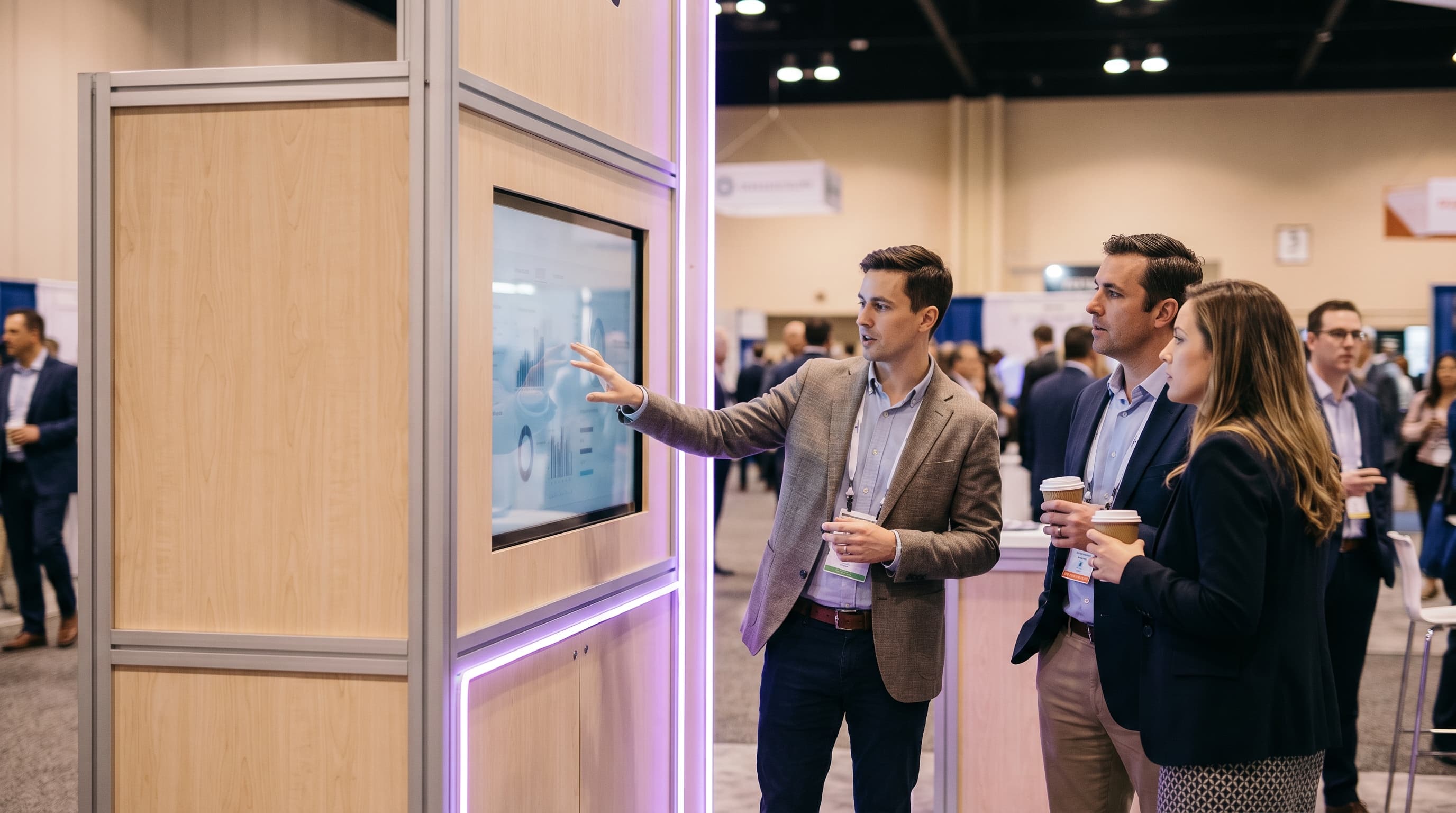
All
Trade Show Booth Ideas: The Complete Guide for 2026
Trade show booth ideas that drive traffic and qualified leads: real budgets, formats, technologies, mistakes to avoid and real-world examples.
12 min

Booth types, realistic budget, location strategy and common mistakes. The practical guide to nailing your trade show booth.
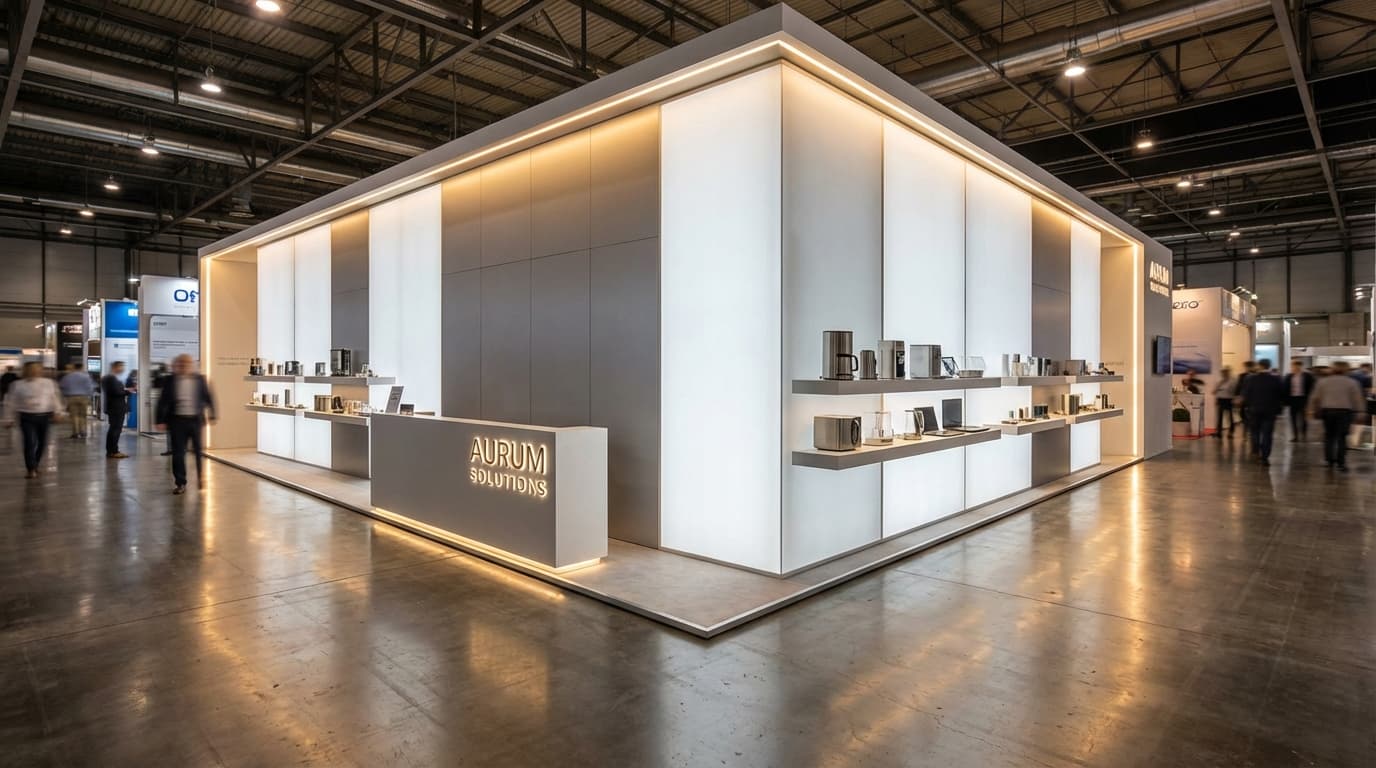
Your booth is your storefront. At a trade show, visitors decide in seconds whether they stop or walk past. A poorly designed booth means lost opportunities. A well-designed one pays for itself on day one.
Here's how to make the right choices : from booth type to budget, location and the details that make the difference.
Not all booths are equal. Your choice depends on budget, goals and how often you exhibit.
The most common. A foldable frame with printed panels, set up in 30 minutes with no tools.
Budget: €500 to €2,000 to buy, reusable.
Best for: SMEs exhibiting 2-3 times a year who want a decent booth without breaking the bank.
Limitations: standardized look, limited modularity. Hard to stand out when your neighbor has the same setup.
Standardized components (aluminum frames, interchangeable panels) assembled to fit your configuration. Adaptable from one show to another.
Budget: €3,000 to €15,000 depending on size and finishes.
Best for: companies that exhibit regularly and want an evolving booth.
Advantage: change the visuals without buying a new structure.
Designed by a professional stand builder, unique to your brand. Architecture, lighting, furniture : everything tailored to your image.
Budget: €15,000 to €80,000+ for the largest.
Best for: large companies with substantial budgets and strong image objectives.
Limitation: high cost and often not reusable as-is.
More and more organizers offer all-inclusive booth packages. You show up, everything's set up.
Budget: €1,000 to €5,000 per show, all included.
Best for: first-time exhibitors or companies testing a new trade show.
Location matters as much as the booth itself. At a 200-exhibitor show, the footfall difference between a good and bad spot can be threefold.
More and more shows offer an interactive floor plan where exhibitors can view available spots and book online. It saves real time: you see the size, position and neighbors before choosing.
Solutions like Keyqo enable organizers to offer this type of plan, with a dedicated space for each exhibitor.
Beyond the booth itself, there are peripheral costs that first-time exhibitors underestimate.
| Item | Range |
|---|---|
| Space rental | €1,500 - €8,000 (depending on surface and position) |
| Booth (purchase or rental) | €500 - €15,000 |
| Design and printing | €500 - €3,000 |
| Furniture | €300 - €2,000 |
| Electricity and connections | €200 - €800 |
| Total | €3,000 - €29,000 |
For a deeper dive into ROI calculations, check our trade show profitability guide.
Having a nice booth isn't enough. Here's what separates a forgettable booth from one that attracts visitors.
The most underrated factor. Good lighting:
A €200-500 investment in additional lighting can transform a basic booth.
Booths that use vertical space (roll-up banners, arches, totems) are visible from afar. At a 5,000m² show, being visible from 20 meters away changes everything.
2026 visitors don't just want to read a brochure. What works:
Your booth team is your best asset, or your worst enemy.
Exhibitor management is a critical topic for organizers. The larger a show grows, the more unmanageable manual processes (emails, Excel spreadsheets, paper floor plans) become.
Shows that adopt digital tools save time on:
That's exactly what we're building at Keyqo.
The trade show market is evolving. A few trends to watch:
Eco-design. Recyclable or reusable booths are increasingly in demand. Some shows award "green booth" labels to responsible exhibitors.
Phygital. Combining physical presence with digital tools: QR codes to demos, augmented reality, badge scanning for lead capture.
Data. Measuring booth footfall (sensors, counting, visitor feedback) to optimize future editions.
Compact booths. The trend is toward smaller but better-optimized surfaces. A well-designed 12m² beats a poorly arranged 24m².
A trade show booth is an investment. The return depends on three things:
And for organizers, offering exhibitors the right tools (interactive floor plan, online booking, centralized tracking) has become a competitive advantage. Learn how to optimize your exhibitor management.
Sources: UNIMEV, Key Figures of the French Event Industry 2025 ; Bedouk/Viparis Study on Trade Shows
Trade show booth ideas that drive traffic and qualified leads: real budgets, formats, technologies, mistakes to avoid and real-world examples.
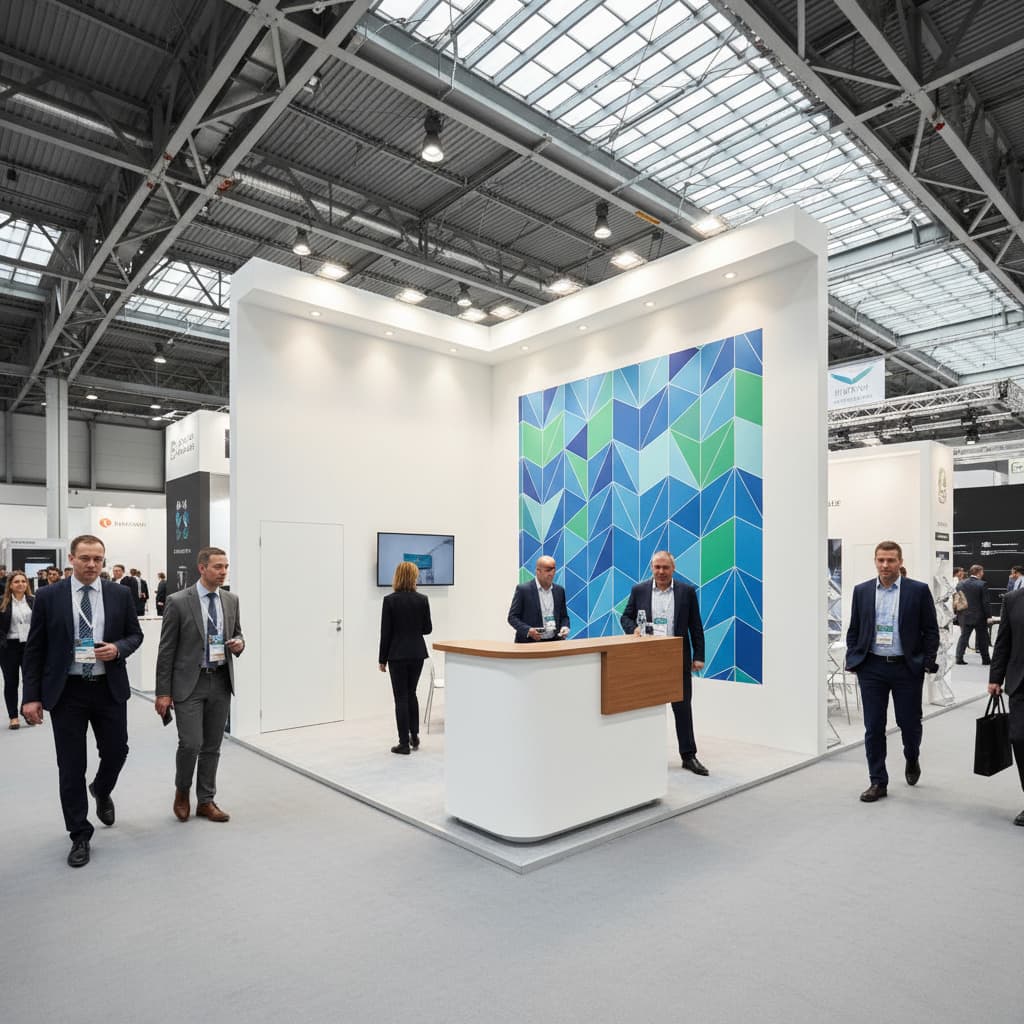
How to design a trade show display that attracts visitors and converts leads. Booth layout, display types, design mistakes to avoid: the full breakdown.
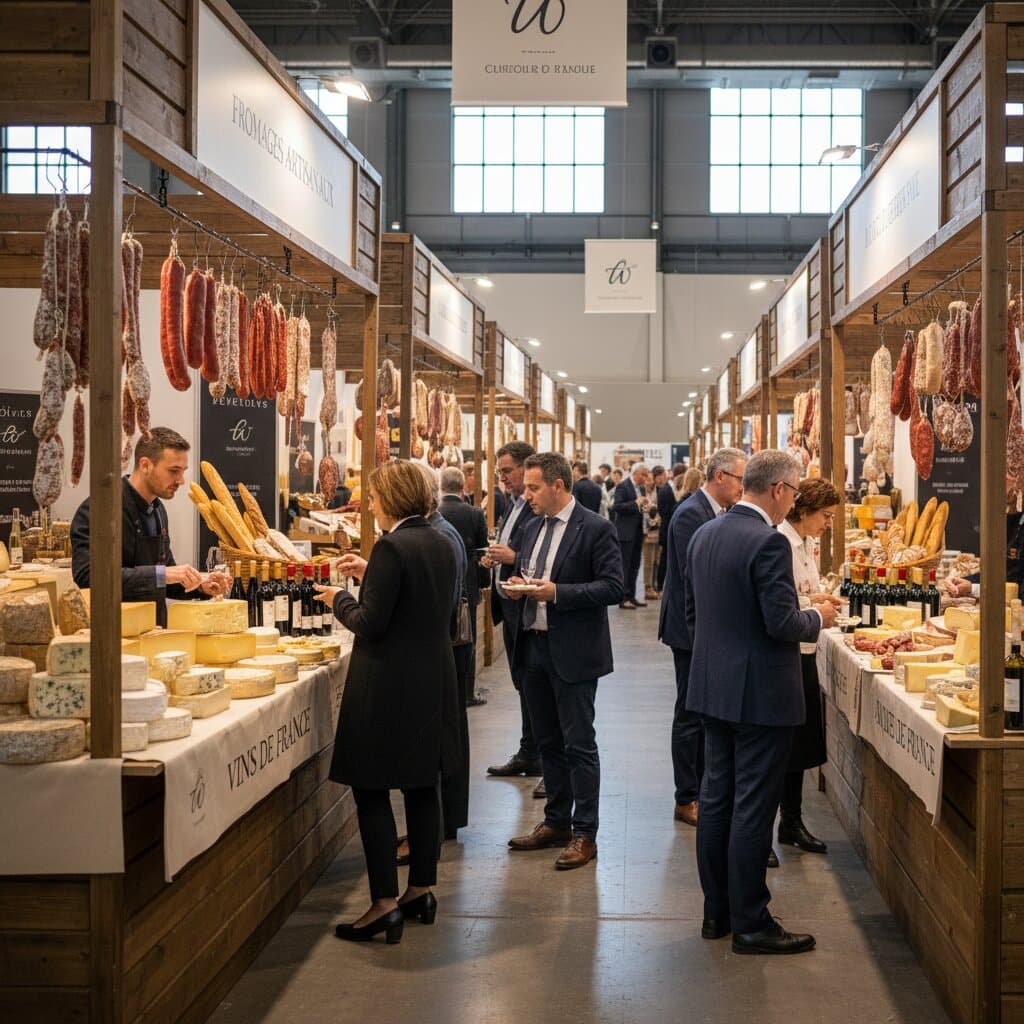
Calendar of gastronomy and wine fairs across France in 2026, by city and region. Budget, exhibitor tips, organizer logistics: the complete guide.