
All
Trade Show Profitability: The Honest 2026 Guide
Calculate the real profitability of a trade show: hidden costs, realistic revenues, and optimization levers. Field data and proven methods.
9 min

The actionable checklist to organize a professional event from start to finish: planning, budget, floor plan, exhibitors, activities, and post-event review.
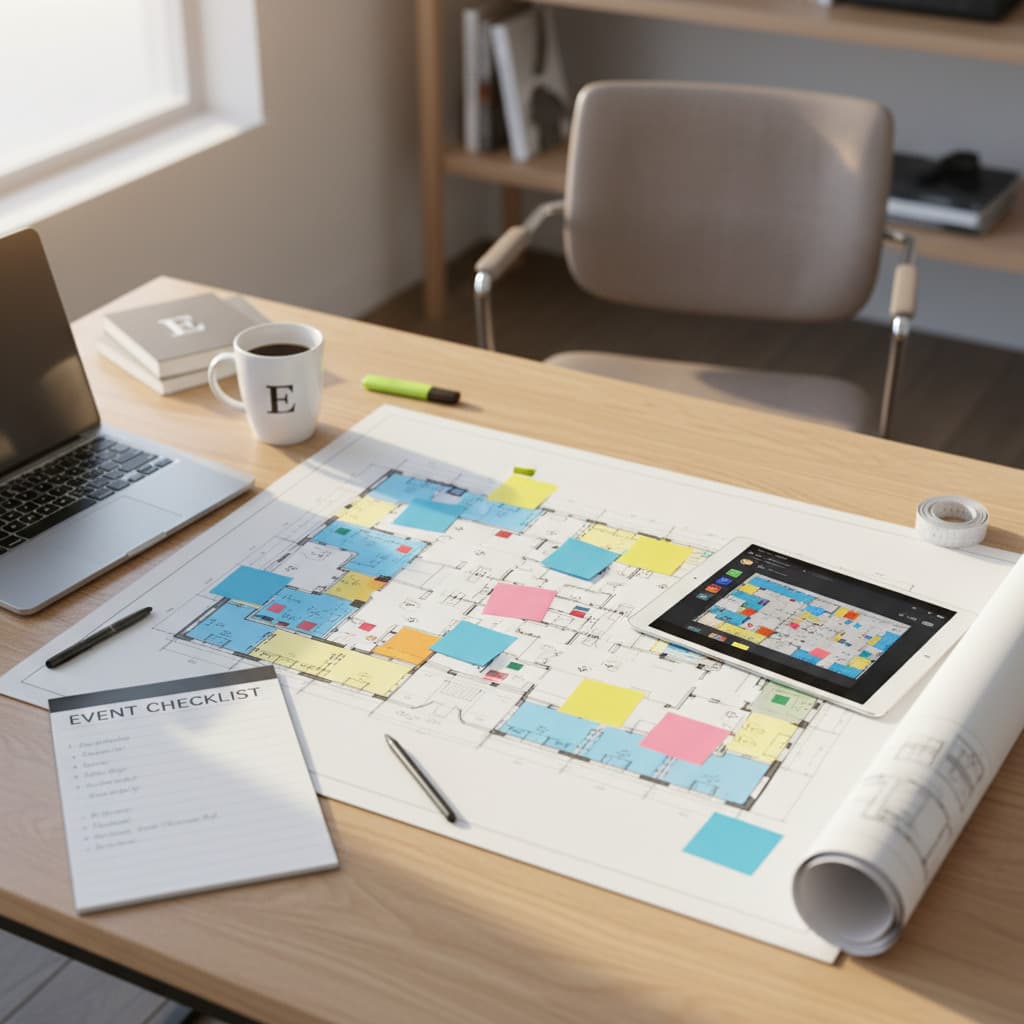
Organizing a professional event means coordinating dozens of moving parts at once: venue, budget, exhibitors, marketing, logistics, security... All with a non-negotiable deadline: event day.
The problem? Most organizers discover issues as they go. A forgotten vendor, a flawed floor plan, a spiraling budget. And in the end, you're firefighting instead of managing.
This checklist is designed to prevent that. 12 concrete steps, in chronological order, with what to do (and what to avoid) at each phase.
A 100-exhibitor, 2-day event averages 400 hours of preparation. Without a methodology, things slip through the cracks. You waste time hunting for information. You redo the same tasks three times.
A structured checklist gives you:
This isn't theory. It's what separates a smooth event from a chaotic one.
Before anything else: why are you organizing this event? The answer shapes everything.
Key questions:
A B2B trade show with 80 exhibitors and a public festival with 5,000 visitors are managed very differently. Clarify the format from the start.
Deliverable: A one-page brief with the format, measurable goals, target audience, and expected size.
The budget is the backbone. And the number one mistake is underestimating it.
Here are the main cost categories:
| Category | % of Budget (estimate) |
|---|---|
| Venue rental | 25-35% |
| Technical (power, sound, lighting) | 10-15% |
| Marketing / communication | 10-20% |
| Staff (security, reception, tech) | 10-15% |
| Insurance and legal requirements | 4-6% |
| Contingency buffer | 10-15% |
The contingency buffer is not optional. On an $80,000 budget, set aside $8,000 to $12,000 for surprises. There will always be some.
For a deeper dive into financial planning, check our guide to trade show profitability.
Deliverable: A budget spreadsheet with projected revenues (booths, tickets, sponsorship) and expenses by category.
Two decisions that go hand in hand, because they're linked.
For the venue:
For the date:
Common mistake: Signing the venue before checking technical constraints. A hall without enough power outlets means $5,000–$15,000 in generator rentals.
The floor plan is the logistical heart of your event. It determines:
A good plan optimizes every square meter without creating bottlenecks. A bad plan leaves booths unsold in dead corners and creates overcrowding elsewhere.
Today, PowerPoint or AutoCAD floor plans don't cut it anymore. An interactive online floor plan lets you visualize spaces, adjust sizes in real time, and let exhibitors pick their spot directly.
Deliverable: A validated floor plan with exhibitor zones, aisles (minimum 3m wide), common areas, and emergency exits.
This is the moment of truth: does your event attract?
What to prepare before opening:
Mistakes that drive exhibitors away:
Ideally, you want an online booking system where exhibitors can see the floor plan, choose their booth, and pay in a single session.
Deliverable: Online registration page, pricing grid, T&Cs, first announcement email sent.
No visitors = no exhibitors next year. Marketing starts 3 months out.
Channel by channel:
| Channel | When | Budget |
|---|---|---|
| Website / landing page | D-3 months | Low |
| Social media (LinkedIn for B2B) | D-3 to D-Day | Medium |
| Email to existing contacts | D-2 months, D-1 month, D-1 week | Low |
| Press / trade media | D-2 months | Variable |
| Online advertising (Google Ads, LinkedIn Ads) | D-6 weeks to D-Day | Variable |
Key point: Match the channel to your audience. A B2B food industry trade show doesn't market on TikTok. LinkedIn and trade publications will be far more effective.
This is the most time-consuming phase. You're juggling:
A centralized management tool saves significant time here. Instead of managing 200 emails and 15 spreadsheets, everything is in one place: registrations, payments, technical requests, floor plan.
For a detailed look at digitalizing this phase, check our trade show management software guide.
Deliverable: An up-to-date dashboard showing each exhibitor's status (registered, paid, pending), processed technical requests, and confirmed vendors.
An event without activities is just an exhibition hall. With activities, it's an experience.
Activity types by format:
Golden rule: Activities must serve the event's objective. If your goal is B2B matchmaking, a structured networking lounge beats a DJ set.
Activity budget: Plan for 5–15% of total budget depending on ambition.
It's the topic nobody likes, but it can shut down your entire event.
Legal requirements for public venues:
Security checklist:
Don't cut corners here. A fire safety inspection on event day can shut you down if standards aren't met.
On event day, you should have no strategic decisions left to make. Everything is planned. You're in execution mode.
The key: a minute-by-minute schedule.
| Time | Action |
|---|---|
| 6:00 AM | Hall opens, setup begins |
| 8:00 AM | Exhibitor check-in, booth verification |
| 9:00 AM | Team briefing (reception, tech, security) |
| 9:30 AM | Doors open for visitors |
| 12:00–2:00 PM | Staff break rotation |
| 5:00 PM | Last visitor entry |
| 6:00 PM | Close, teardown begins |
Tip: Designate an "operations director" as the single point of contact for all issues on event day. It doesn't have to be you : you should be free for exhibitors and VIPs.
No measurement, no improvement. Here are the essential KPIs:
Financial KPIs:
Operational KPIs:
An analytics dashboard gives you these numbers in real time instead of reconstructing them manually two weeks later.
Deliverable: A post-event report with KPIs, highlights, and areas for improvement.
The event is over, but the work continues.
Within 2 weeks after the event:
Within the following month:
Pro tip: Satisfied exhibitors re-register quickly. The sooner you send the survey, the higher the response rate. And the earlier you open registration, the sooner you secure revenue.
To wrap up, here are the most common pitfalls.
1. Managing everything in spreadsheets. One for the floor plan, another for exhibitors, a third for the budget... Beyond 50 exhibitors, it's unmanageable. Errors multiply, versions conflict. Today there are integrated management platforms that centralize everything.
2. Underestimating the budget by 20–30%. Surprises always happen. An emergency generator, a vendor cancellation, a forgotten order. The contingency buffer isn't a luxury.
3. Opening registration too late. Exhibitors plan their calendar 3–6 months ahead. If you open registration 6 weeks before, you miss the best ones.
4. Neglecting marketing. "If we build a great show, they'll come." No. Without active promotion, even the best event stays empty.
5. Not measuring results. Without data, you can't know what works. You can't justify the budget. You can't improve. Measure everything you can.
Organizing a professional event is a multi-month project that demands structure. This 12-step checklist covers the essentials, from initial planning to post-event review.
Keys to success:
Looking to simplify your event organization? Check our features or our FAQ to see how Keyqo can help.
Sources: UNIMEV, Key Figures of the French Event Industry 2025 ; CCI France, Practical Guide to Trade Show Organization ; French Public Venue Regulations (ERP)
Calculate the real profitability of a trade show: hidden costs, realistic revenues, and optimization levers. Field data and proven methods.
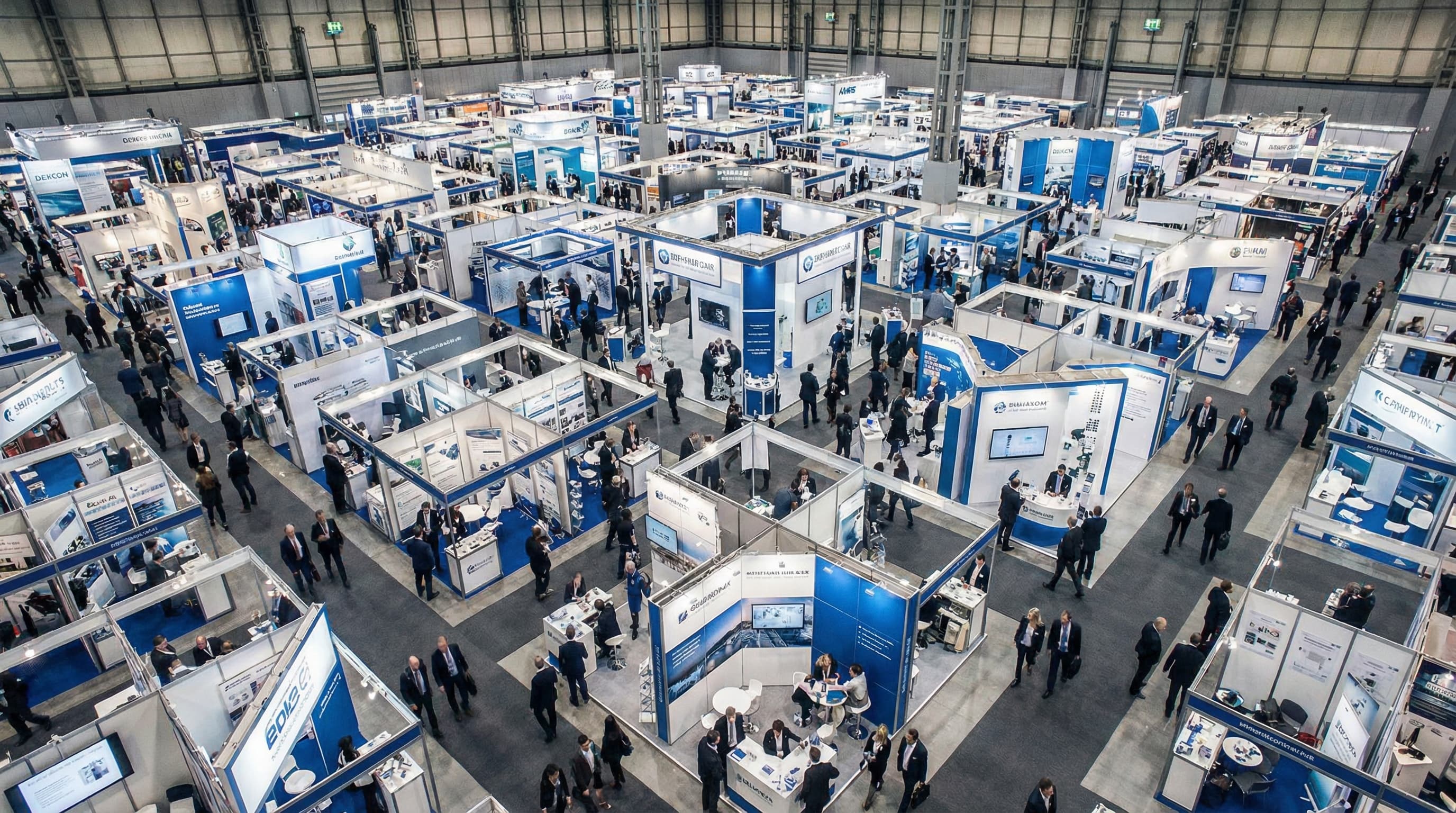
UNIMEV data, field feedback and projections: what's really changing in trade show organization this year. No-buzzword analysis.

Trade show management software for your event organization: exhibitor management, interactive floor plans, invoicing. Complete guide and selection criteria.