All
Trade show floor plan: create your event layout (2026 guide)
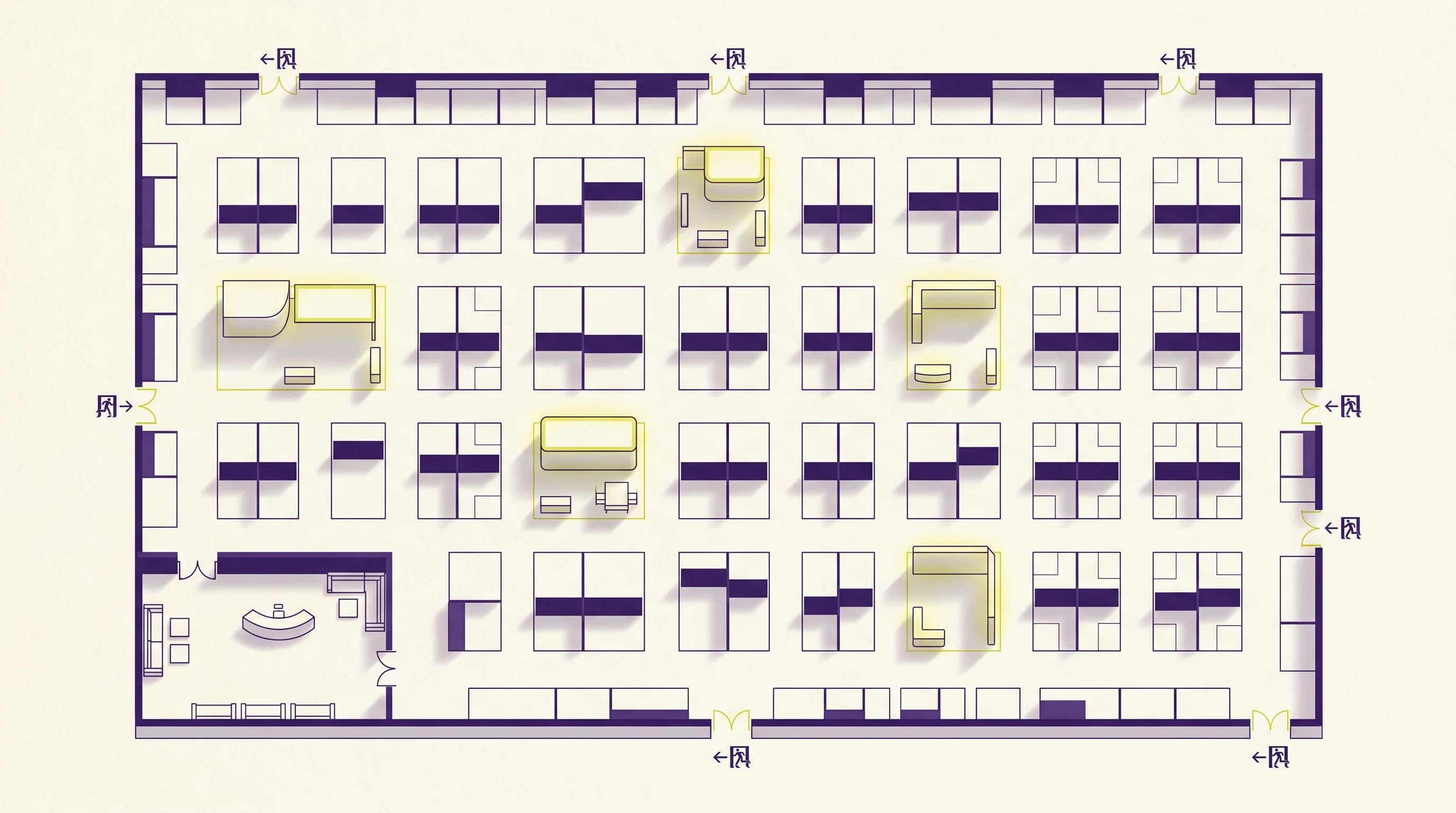
How to create your trade show floor plan: safety constraints, a 6-step method, aisle widths, booth sizes and moving to an interactive bookable plan.
8 min

Trade show booth ideas that drive traffic and qualified leads: real budgets, formats, technologies, mistakes to avoid and real-world examples.
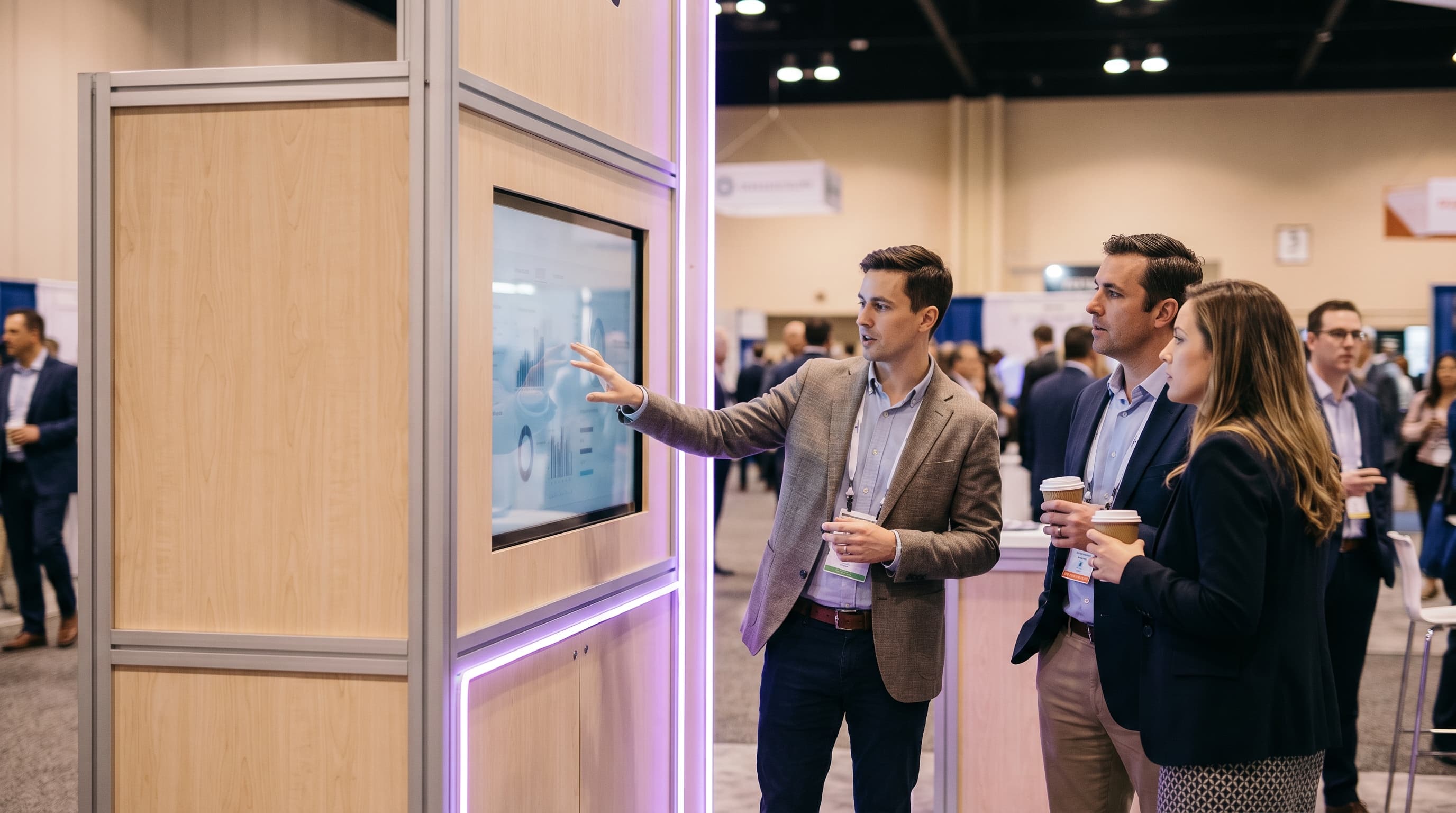
At most major B2B trade shows, the same scene plays out again and again. Out of 30 booths along the same aisle, one or two concentrate all the attention while the others watch attendees walk by. The difference isn't booth size, location, or furniture budget, it's animation. The one booth attracting traffic offers an activity, a demo, a tasting, a workshop. The other 28 hung banners, set up screens looping videos, and posted hostesses behind empty counters.
This observation is backed by industry data. According to the CEIR (Center for Exhibition Industry Research), 75% of trade show attendees prefer booths with interactive presentations, but only 46% of exhibitors offer them. And 67% of attendees appreciate games and activities, while only 8 to 10% of exhibitors provide them. The trade show booth ideas space is an ocean of opportunity where most participants just hang banners and wait.
This guide is for exhibitors who invest between $5,000 and $50,000 in a trade show and want their booth to generate traffic, qualified leads, and measurable ROI. A specific section for organizers wondering which activities to encourage at their own events comes further down.
A trade show attendee decides in just a few seconds whether to stop at a booth or keep walking. Multiple industry studies converge on an initial attention window of 3 to 8 seconds. During that span, their brain runs three calculations: "Does this concern my job? Is anything happening here? Will I feel pressured if I stop?"
Traditional booths fail on all three counts. A generic banner answers the first question poorly. The lack of movement answers the second poorly. And salespeople scanning badges while waiting for prey answer the third terribly.
Booth animation, in the sense we use it here, isn't just a "fun activity." It's a setup that answers all three questions in seconds:
When these three ingredients come together, visitor engagement rises significantly. The difference is in the experience offered, not in the budget. For more on the physical structure of your booth, see our trade show display design complete guide.
This is the most underestimated category. Most exhibitors imagine that good animation is expensive, it isn't. The best low-budget activities share a common trait: they give visitors a reason to stop that has nothing to do with your product.
A thermos of quality coffee (not the convention center machine), branded cups, and maybe a few small treats. Budget: $50 to $100 per day, or $150 to $300 for a 3-day show.
At B2B trade shows, coffee quickly becomes the number one excuse for stopping. The visitor isn't obligated to listen to your pitch, they came for the coffee. But once they're there, you have 3 natural minutes of conversation while they finish their cup. It's one of the best trade show booth ideas to attract visitors without technology investment. The conversation-per-dollar ratio is rarely beaten by more sophisticated activities.
A large board with an open question related to your industry. If you're a SaaS vendor: "How many hours per week does your team waste on manual invoicing?". If you're a construction supplier: "What's your biggest jobsite headache in 2026?". If you're in B2B cosmetics: "What ingredient are you searching for your next formulation?". You provide Post-its and pens.
Three benefits at once. First, it's visually alive (a wall filling up with notes draws attention). Second, it's free market research on your exact target. Third, it generates LinkedIn content for the following weeks ("Here's what 200 professionals shared with us at trade show X"). Cost: $30 in supplies, $0 in booth space. Hard to beat that ROI.
A short challenge (30 to 90 seconds) tied to your product: assemble a kit, solve a puzzle, spot an error in a document, get the highest score on a mini-game. Visible timer, displayed leaderboard, symbolic prize for the daily top score.
The competitive instinct is a powerful psychological trigger. Well suited to high-traffic shows (consumer expos, large industry events), this format easily generates dozens of qualified participations per day. At B2B shows the volume will be lower but qualification higher. Cost: between $0 and $200 depending on materials.
This category has evolved the most over the past two years. Affordable touchscreens, smartphone-based augmented reality, and falling LED rental costs have made accessible what cost ten times more in 2020.
A 43 to 65 inch screen, mounted on a stand or built into the booth, presenting your catalog, a product configurator, or an interactive demonstration. Visitors explore on their own; you step in when they have questions.
CEIR reports that 60% of visitors prefer interactive screens over static screens looping a video (compared to 42% for static displays). The engagement difference is measurable: a static screen loses attention quickly, while a touchscreen holds visitors for several minutes on average.
Realistic budget: $700 to $1,800 for a 50-inch screen rental over 3 days, plus $1,000 to $3,000 if you want a custom interface rather than a glorified PowerPoint. If you exhibit several times a year, purchase pays for itself after 4-5 shows.
Visitors scan a QR code with their phone and see your product at full size in their actual space. No headset needed, no app installation : WebXR frameworks work directly in Safari and Chrome.
Particularly suited to bulky, immobile, or complex products: industrial machinery, furniture, medical equipment, vehicles, architecture, modular construction. At construction or automotive shows, it's a game-changer for showing products you can't physically bring to the booth.
Budget: $500 to $2,000 to create the experience using tools like Vectary, Adobe Aero, or 8th Wall. Once built, the experience is reusable across all your shows and even on your website.
A professional photo setup (lighting, branded backdrop, props tied to your brand) with instant printing and email delivery. Visitors leave with a physical souvenir and you capture their contact.
The format has evolved significantly: we've moved from the tunnel-style photobooths of the 2010s to much more refined installations. At tech shows like SXSW or large industry expos, you regularly see photo corners with dynamic LED backdrops where photos integrate animated visual elements. Budget: $200 to $500 per day for a turnkey rental, or $800 to $1,500 total if you buy a reusable kit.
This category is reserved for exhibitors with serious budget and a clear commercial objective : typically those investing $30,000+ in their show participation, where each lead is worth between $500 and $5,000 in potential value.
This is the king of activities at technical and industrial trade shows. You program demos at fixed times (every 90 minutes, for example), in a mini-event format: 2-minute intro, 10-12 minute demo, 5-minute Q&A. You announce times on a sign visible from afar and on the show's social media.
At industrial shows like CES, IFA, or major industry expos, this is what separates "leader" booths from merely "present" booths. Demos create scheduled crowds, crowds attract more visitors (crowd psychology is relentless), and each demo generates a wave of hot leads.
Budget: mostly preparation time (1 to 2 days to script and rehearse), plus $0 to $5,000 depending on whether you need specific demo equipment.
"Learn how to automate your customer follow-ups in 20 minutes" for a SaaS vendor, "Master lime-based wall coatings in 20 minutes" for a construction supplier, "Discover the basics of local SEO in 20 minutes" for a digital agency. Sign-ups on-site or via the show's website. Format of 4 to 8 participants, taught by one of your experts. Visitors leave with a real skill and a sense of positive debt toward you.
This is the king format at technical shows where attendees come to learn, not just to buy. At construction, IT, manufacturing, or craft shows, workshops convert massively because they prove your expertise.
The format requires real investment: 6-10 m² of additional booth space, teaching materials, and especially a dedicated person who knows how to teach (not just sell). But the ROI is exceptional: 70 to 90% of workshop participants become qualified leads.
The visitor sits down with one of your salespeople, configures their project on a tablet or screen, and leaves with a personalized quote printed on-site or sent via email. A particularly effective format for complex products: industrial equipment, software solutions, custom services, design and furniture.
At furniture and design shows, brands offering this format see spectacular results: visitors who spend 20 to 30 minutes with a salesperson convert in 30 to 50% of cases into actual orders within 2 months of the show.
For every activity that works, there are two that no longer work in 2026. What worked 10 years ago can be counterproductive today.
Hostesses handing out swag at the entrance of the booth. Visitors take it, say thanks, walk away. No conversation, no qualification. The swag becomes a logistical burden with no commercial return. Unless the swag is tied to a capture mechanism (badge scanned in exchange for swag), it's wasted money.
Screens looping a corporate video. Visitors watch for 3 seconds, recognize it as advertising, look away. If you want a screen, put an interactive demo or a live data dashboard on it, not a presentation video.
Drawing-style contests with end-of-show winners. The visitor drops their card in a bowl and leaves. No conversation. You collect 200 cards, 90% of which are unqualified curiosity-seekers. Better to use a setup that qualifies upstream (a quiz that filters by industry, for example).
Hostesses scanning badges while waiting for prey. Visitors sense the aggression from 5 meters away and switch sides of the aisle. If you want to approach someone, do it after they've stopped on their own.
"Premium" swag costing $8 a piece. Unless you're 100% sure of your target audience, it's a money pit. Prefer 50 items at $1 each handed out with qualification, rather than 200 items at $8 distributed blindly.
If you're a trade show organizer rather than an exhibitor, your interest isn't in individual activities but in the overall ecosystem. The more exhibitors animate, the longer visitors stay, the more they return, the more your show is perceived as valuable.
Some organizers integrate an encouragement (or even an obligation) to provide an activity into their exhibitor agreement. This isn't hypothetical: shows like CES require live product demos at every "innovation hall" booth.
The effect on overall show quality is massive: fewer "sad" booths, more reasons for visitors to circulate, and a Net Promoter Score that climbs year over year.
Rather than letting activities scatter randomly, some organizers create "activity islands" identified on the floor plan: demo zone, workshop zone, food truck zone. Visitors know where to find action when they need an "active" break.
At major design shows, dedicated areas concentrate experiential activities. At culinary shows, central arenas host live demonstrations from star chefs. This thematic zoning works and structures the visitor experience.
A few organizers go as far as offering exhibitors turnkey kits: interactive screen rentals at negotiated rates, partnerships with photographers for photo corners, animation furniture available for hire. This is a value-added service that justifies a slightly higher booth price and elevates overall quality.
A booth activity is a magnet for conversation. Conversations generate contacts. Contacts only become business if you follow up within 48 hours.
This is statistically the weakest link in the chain. According to CEIR, 80% of leads collected at a trade show never receive any follow-up. Only 40% of exhibitors follow up within a week. All the effort, all the budget, all the energy spent on the booth gets neutralized by the absence of structured follow-up.
When follow-up is done seriously, ROI is measurable: CEIR data indicates that around 20% of followed-up leads convert into customers within 6 months of the event. In other words, out of 100 qualified contacts, 20 become business if you do the work behind it.
A few principles to avoid being part of the 80%:
The animation budget depends on your objective and your overall booth investment. For a 3-day B2B show, expect $150 to $500 for an effective simple activity (coffee corner, insight wall), $700 to $3,500 for a technology-driven activity (touchscreen, smartphone AR, photo booth), and $3,500 to $18,000 for high-impact setups (scheduled demos, hands-on workshops, configurators with quote generation). The classic mistake is overinvesting in furniture and underinvesting in animation: it's animation that brings visitors, not the counter.
At B2B shows, scheduled live product demos and 20-minute hands-on workshops have the best lead qualification rates. Workshops typically convert 70 to 90% of participants into qualified leads because they prove expertise and create a personal connection. For a tighter budget, the coffee corner remains the activity with the best leads-per-dollar ratio.
Four free or near-free levers: (1) clearly display your value proposition in large type visible from the aisle, (2) create movement and life on the booth (no empty counter with 2 hostesses waiting), (3) offer a simple activity like coffee, an insight wall, or a timed challenge, (4) announce your peak moments (demos, workshops) at fixed times to create scheduled crowds.
Avoid at all costs: hostesses scanning badges while waiting for prey (perceived as aggressive), screens looping corporate videos (ignored within 30 seconds), end-of-show drawing contests (zero qualification, bowl full of useless cards), and premium swag at $8+ given to everyone (budget pit with no commercial return).
Follow-up must start within 48 hours with a personalized email that references your specific conversation and proposes a concrete action (short call, demo, targeted documentation). According to CEIR, 80% of trade show leads never receive a follow-up : statistically the largest ROI loss in the industry. With structured follow-up, around 20% of leads convert into customers within 6 months.
Booth animation is no longer optional in 2026. The trade show attendee has become more demanding, their time is more scarce, and competition for their attention is fiercer. Exhibitors who succeed are those who transform their booth from a presentation space into an experience space.
You don't need a huge budget. A coffee corner at $200 can generate more qualified leads than a $5,000 LED wall, if intent is clear and follow-up is serious. The right balance depends on your target, your product, and the show you're exhibiting at.
The rule that summarizes everything: do something that gives the visitor a reason to stop that isn't your sales pitch. Once they've stopped, you've won.
If you're organizing a trade show yourself and want to give exhibitors a framework where animating their booths becomes simple (detailed interactive floor plan, booth and technical constraint management, integrated payments), Keyqo is built exactly for that. Each exhibitor accesses a dedicated site for their listing, technical info, and visitor communication.
For more on organizing a professional event end-to-end, see also our 12-step organize professional event checklist and our complete guide to organizing a trade show.
---
Sources:
How to create your trade show floor plan: safety constraints, a 6-step method, aisle widths, booth sizes and moving to an interactive bookable plan.
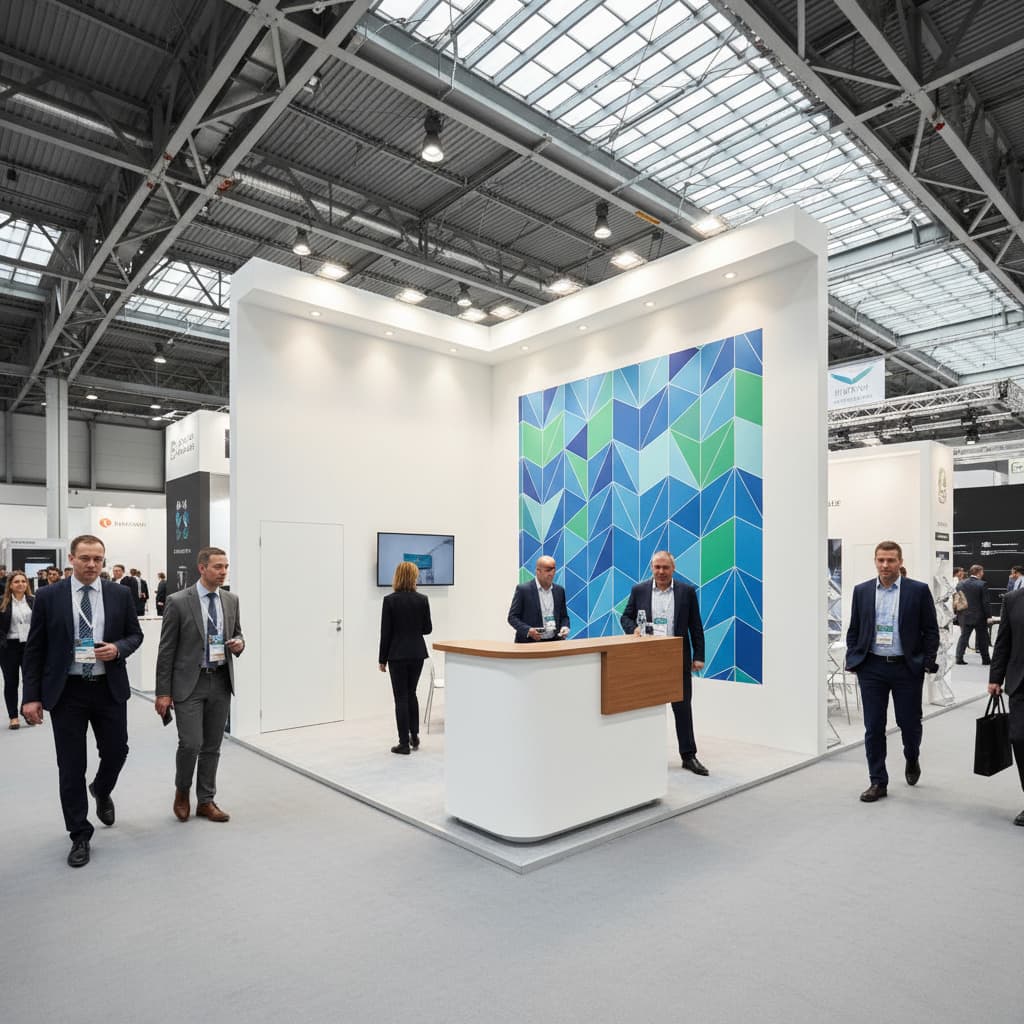
How to design a trade show display that attracts visitors and converts leads. Booth layout, display types, design mistakes to avoid: the full breakdown.
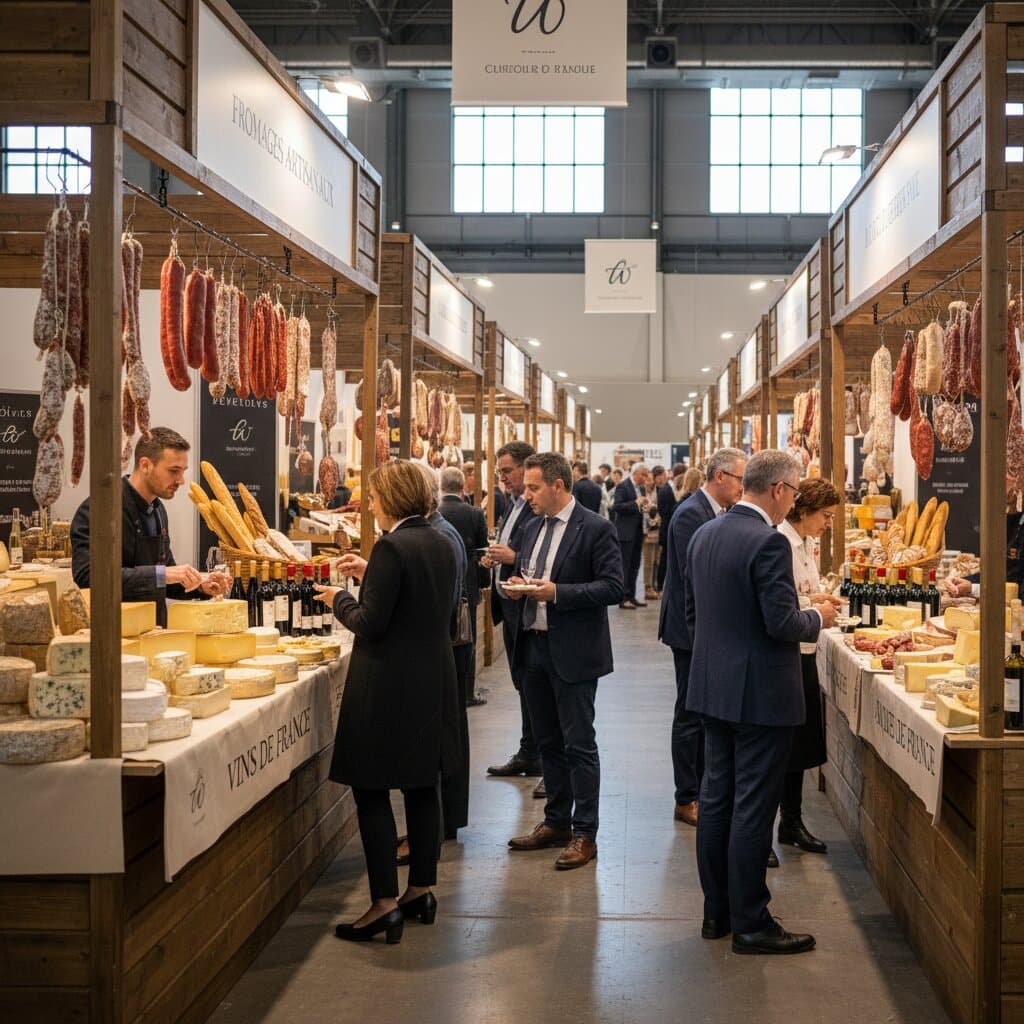
Calendar of gastronomy and wine fairs across France in 2026, by city and region. Budget, exhibitor tips, organizer logistics: the complete guide.